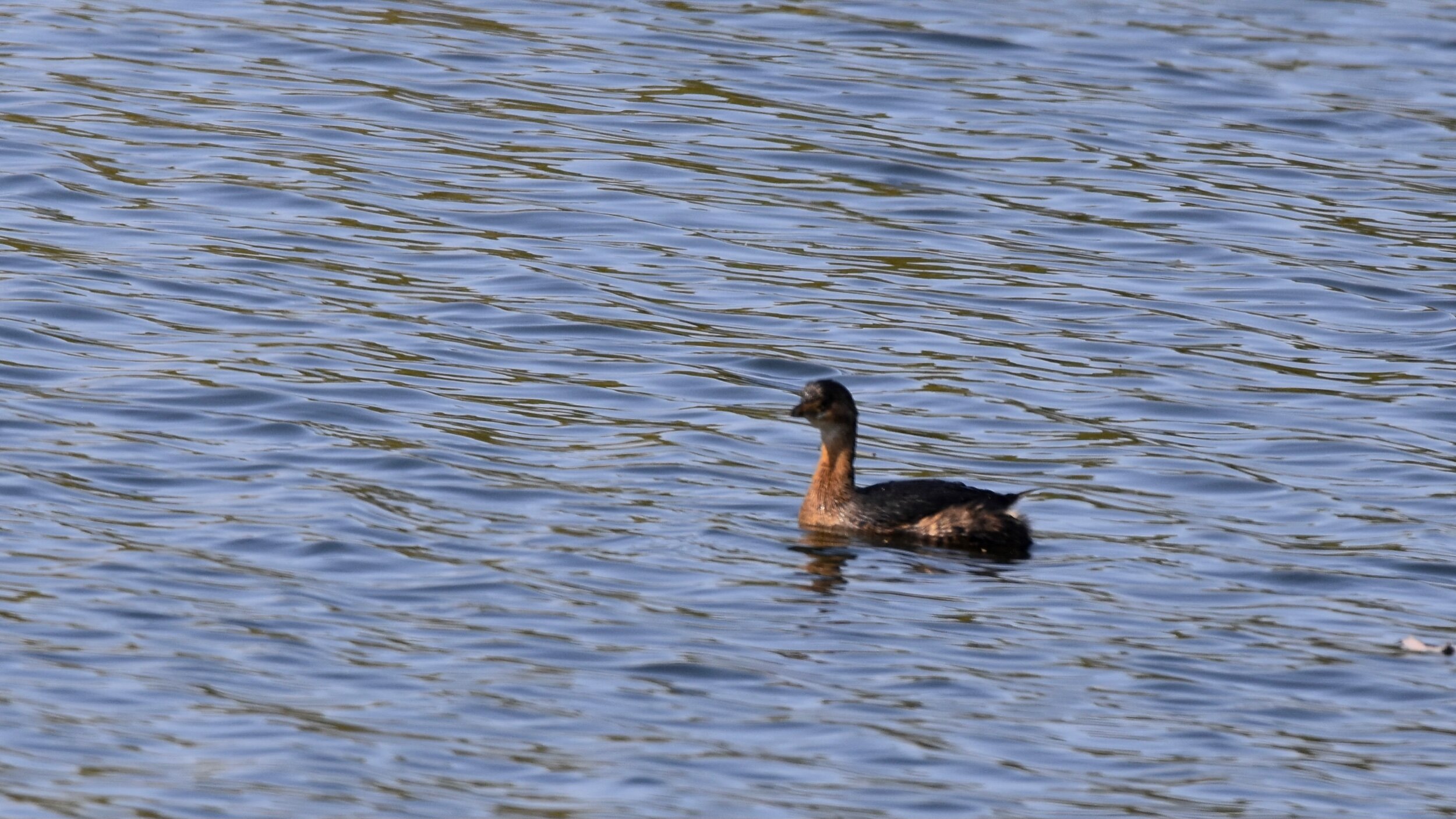
This was a surprise. Red-winged Blackbird migrate early and we have not seen one for several weeks. This one just seemed out of place, at least for October. I guess that is, ‘out of time’. Maybe he is a time-traveler.
Here is some good reading about the plumage of this beautiful bird:
Succession of plumages and molts
Juvenile plumage: in both males and females, juvenile plumage is similar in color and pattern to that of the adult female, except for the yellow coloration of the lower body and the sides of the head . The shoulder spots appear mottled and are brown and yellow or brown and beige. Other sources describe the juvenile plumage of the male as follows: above, including the sides of the head, the wings, the tail and the lesser coverts - the feathers of the "shoulders" -, dull brownish black - not seen no red at this stage—, with beige-bordered feathers, paler and narrower in primaries, rectrices, head, and bladderand deeper in the scapulars and secondaries; below, pinkish beige, ocher above chin, densely veined — except chin — with brownish black stripes; undefined ocher-beige superciliary list. The female is described as more brown above with less beige below and a closely veined chin.
First pre-basic molt (or post-juvenile molt): Generally begins 45-60 days after individuals have left the nest. The molt begins in August and the time at which it begins varies between early and late clutches. This is a complete molt, except for the retention in some individuals of a few down feathers under the wing.
Appearance in autumn and winter of the first basic plumage (also called the first winter plumage or immature plumage): in the male, it is black, with the feathers of the upper part bordered with brown or beige and those of the lower part bordered with beige or white. The bird then has a mottled appearance. The shoulder spot is generally orange with black speckles, especially on the yellow stripe. Some immature males have a reddish patch like adults, but with black specks on the yellow band. Others have a blackish spot on the shoulder. Other sources describe the male's first winter plumage as follows: all plumage, including wings and tail, greenish-black, much of it with beige and rust edges, paler underneath and faint or absent in primaries and rectrices; minor wing covers - "shoulders" - orpiment-dull orange, each feather with black subterminal bars or spots; medium beige, deep ocher coverts, generally mottled with black in subterminal areas, mainly in the beards of the inner part of the feathers; generally black spines.
Females are dark above with feathers bordered with beige or rust. The lower part shows black and white streaks, but with more beige on the chest and sometimes on the flanks than in the reproductive plumage. The medium and secondary major cover feathers are noticeably bordered with beige. They generally lack the pink coloration on the chin and throat - which may be beige, yellow, or light salmon - and the crimson wing patch - which may be rust, orange, or gray - typical of second winter plumage.
Appearance in spring and summer of the first basic plumage (also known as the first breeding plumage or sub-adult plumage): the males, which normally are not yet defending a territory, present a dull black coloration acquired by the wear of the edges of the feathers.[41][42] The stain alar may be more noticeable than in the first winter plumage due to wear subterminal blacklists, which generally only remain in the form of small black spots.[41] Mottled wing spots are characteristic of young individuals and the extent of orange is highly variable. Females, which are usually already breeding, exhibit plumage similar to the first winter plumage, but darker above due to wear on beige edges or rust on feathers. The chest is less beige, and has a black and white veining.
Second and subsequent prebasic molts (or postnuptial molts) : the second prebasic molt takes place approximately one year after the first. Postnuptial molts constitute complete molts, except for the occasional retention of a few down feathers under the wing.
Appearance in autumn and winter of the second and subsequent basic plumages (also called adult winter plumage or second winter plumage) : the male no longer exhibits the mottled appearance characteristic of the autumn and winter appearance of the first basic plumage. The lower part is almost immaculate and similar to that of the reproductive plumage. The head and back feathers and the secondary covers are bordered with brown and beige.[41] The wing blot becomes bright scarlet-vermilion, while deep ocher beige coloration appears on the medium coats. Other sources describe the adult winter plumage of the male as follows: glossy greenish black; feathers of the head, back, major wing covers and tertiary more or less bordered, depending on the individual, beige and rust; below, paler or absent edges. The female's plumage is similar to the autumn and winter appearance of the first basic plumage, except that the wing spot is generally crimson and the chin and throat pink.
Aspect in summer and spring of the second and subsequent basic plumages (or adult bridal plumage): it is acquired through the wear of the feathers. is similar to the appearance in the spring and summer of the first basic plumage, but the alar spots of both sexes have a more intense color and chin and throat of the female.[41] The beige and brown edges of the male feathers disappear.
Despite the fact that the brown or white tips on the feathers of the males are larger just after the molt and that they wear out throughout the year, the individuals vary considerably regarding the size of these non-black tips on the feathers in spring. (See Wikipedia for much more.
~ Rick
Rick’s latest technology muse:
Check out our vlog, which includes more pictures and video on YouTube at tales.photos. Remember to subscribe!
Prints are available for many of the photos on this site on canvas, metal or glass. Contact Rick for more information.
©2019 ©2020 Rick Cartwright