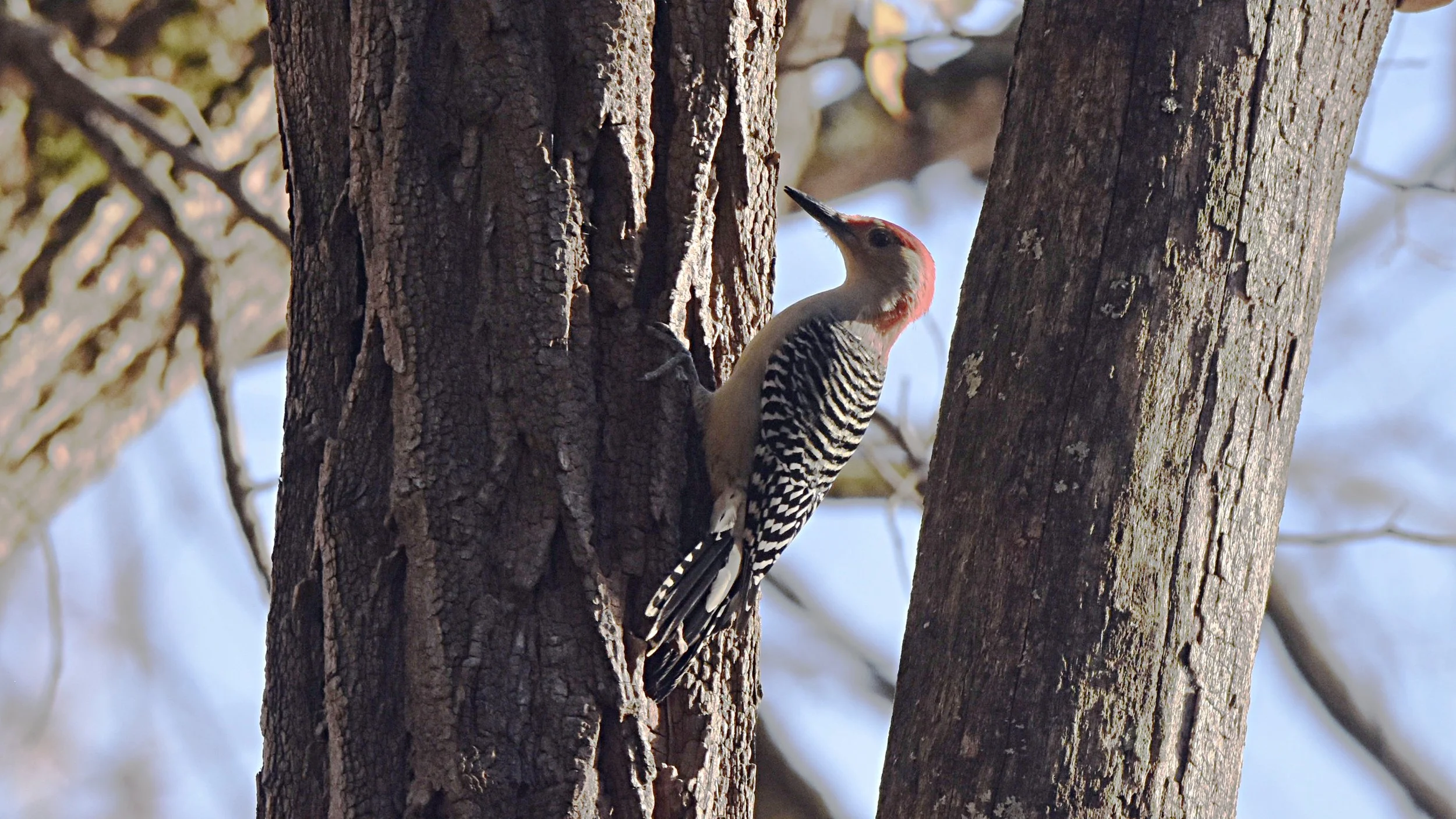
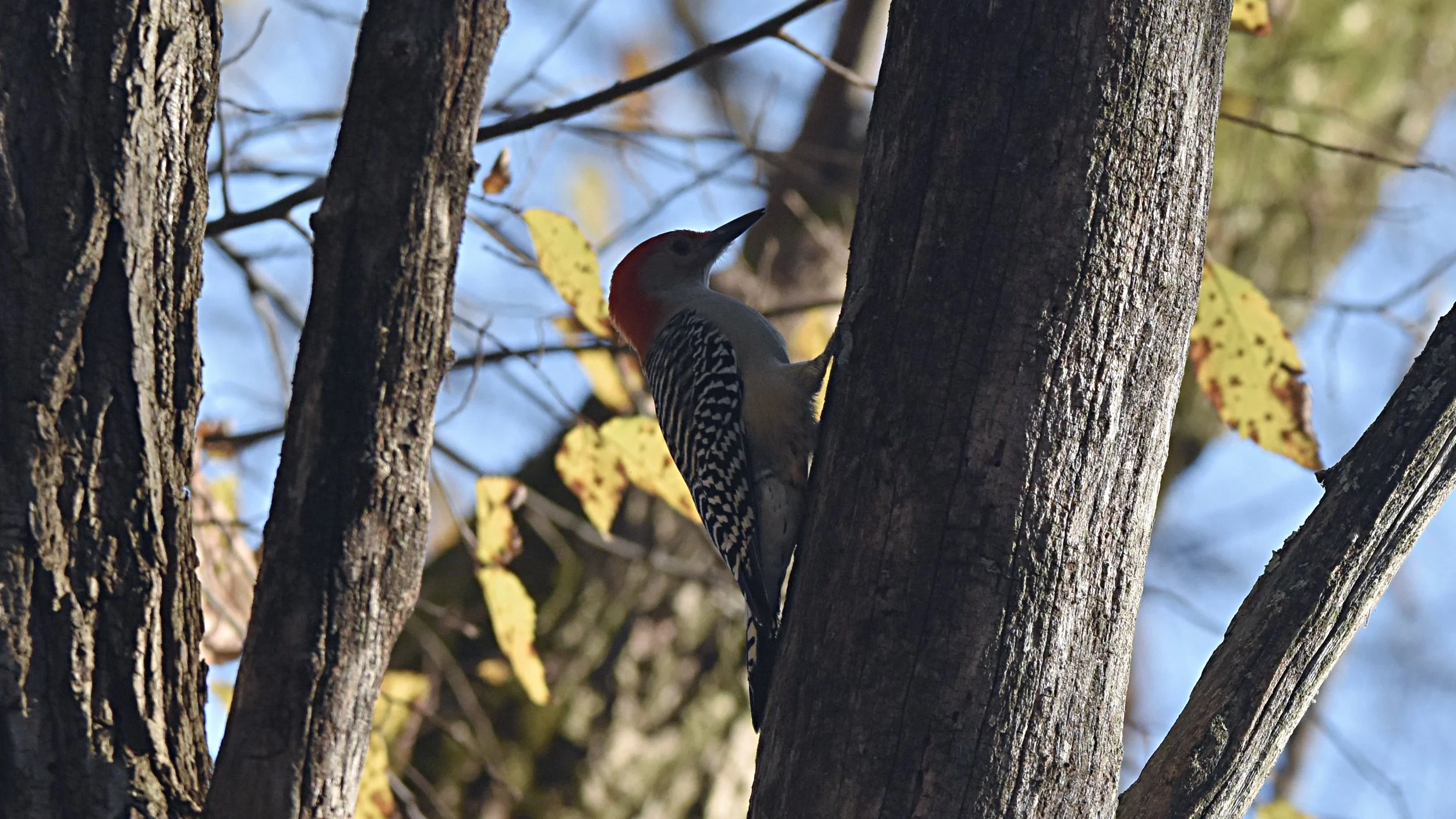
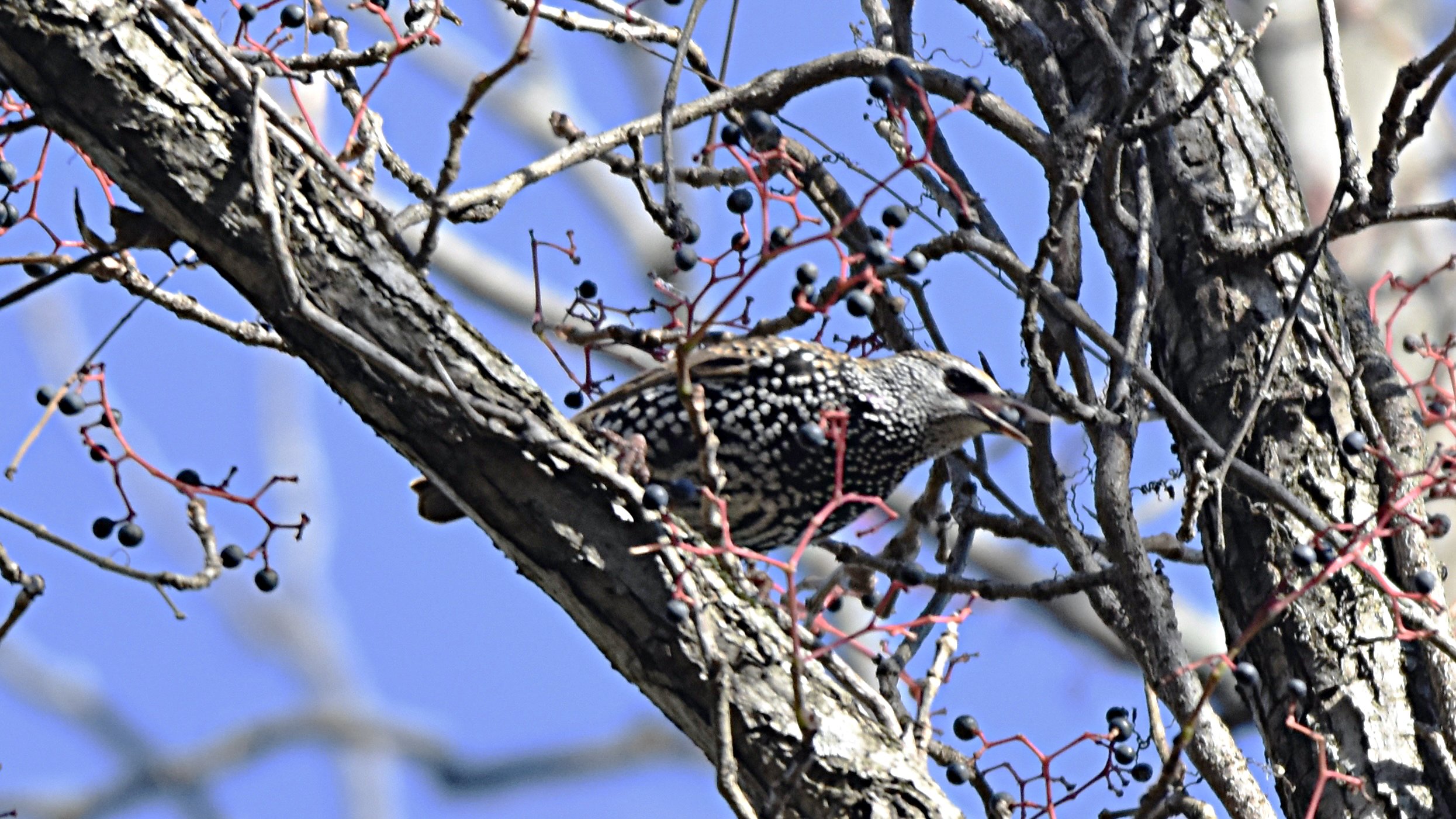
This is the time of year when we see so many American Robins. I lost count this week, but did get this photo.
What I did not know is that there are seven subspecies of American Robin:
Seven subspecies of American robin are recognized. These subspecies intergrade with each other and are only weakly defined.[7]
The eastern robin (T. m. migratorius), the nominate subspecies, breeds in the U.S. and Canada, other than down the West Coast, to the edge of the tundra from Alaska and northern Canada east to New England and then south to Maryland, northwestern Virginia, and North Carolina. It winters in southern coastal Alaska, southern Canada, most of the U.S., Bermuda, the Bahamas and eastern Mexico.
The Newfoundland robin (T. m. nigrideus) breeds from coastal northern Quebec to Labrador and Newfoundland and winters from southern Newfoundland south through most of the eastern U.S. states to southern Louisiana, southern Mississippi and northern Georgia. It is uniformly darker or blackish on the head, with a dark gray back. The underparts are slightly redder than those of the eastern subspecies.
The southern robin (T. m. achrusterus) breeds from southern Oklahoma east to Maryland and western Virginia and south to northern Florida and the Gulf Coast states. It winters through much of the southern part of the breeding range. It is smaller than the eastern subspecies. The black feathers of the forehead and crown have pale gray tips. The underparts are paler than those of the eastern subspecies.
The northwestern robin (T. m. caurinus) breeds in southeastern Alaska through coastal British Columbia to Washington and northwestern Oregon. It winters from southwestern British Columbia south to central and southern California and east to northern Idaho. It is slightly smaller than the eastern subspecies and very dark-headed. The white on the tips of the outer two tail feathers is restricted.
The western robin (T. m. propinquus) breeds from southeastern British Columbia, southern Alberta, and southwestern Saskatchewan south to southern California and northern Baja California. It winters throughout much of the southern breeding range and south to Baja California. It is the same size as, or slightly larger than, the eastern subspecies, but paler and tinged more heavily brownish-gray. It has very little white on the tip of the outermost tail feathers. Some birds, probably females, lack almost any red below. Males are usually darker and may show pale or whitish sides to the head. The San Lucas robin (T. m. confinis) breeds above 1,000 m (3,300 ft) in the highlands of southern Baja California. This subspecies is particularly distinctive, with pale gray-brown underparts. It is relatively small, and the palest subspecies, with uniform pale gray-brown on the head, face and upperparts. It usually lacks any white spots to the tips of the outer tail feathers, which have white edges. It is sometimes classed as a separate species, but the American Ornithologists' Union regards it as only a subspecies, albeit in a different group from the other six subspecies.
The Mexican robin (T. m. phillipsi) is resident in Mexico south to central Oaxaca. It is slightly smaller than the western subspecies, but has a larger bill; the male's underparts are less brick-red than the eastern subspecies and have a rustier tone.
So, there you go ..
~ Rick