One Of Nature’s Great Divers

Adjustments.jpeg

I believe this is a double-crested cormorant. I have photographed this bird before, but it has been a long time since we encountered one. We actually saw two of them. The 1st one was a Kiser Lake a couple weeks ago, then we saw this one at Hueston Woods State Park earlier this week.

I guess she was shy. She would dive and stay under water for a long time, then surface some distance from where we last saw her. I managed this shot. They are great divers. From Wikipedia:

The double-crested cormorant swims low in the water, often with just its neck and head visible, and dives from the surface. It uses its feet for propulsion and is able to dive to a depth of 1.5–7.5 m (4 ft 11 in–24 ft 7 in) for 30–70 seconds. After diving, it spends long periods standing with its wings outstretched to allow them to dry, since they are not fully waterproofed. This species flies low over the water, with its bill tilted slightly upward, sometimes leaving the colony in long, single-file lines.

~ Rick

***
Rick’s latest technology muse:

Check out our vlog, which includes more pictures and video on YouTube at tales.photos. Remember to subscribe!

Prints are available for many of the photos on this site on canvas, metal or glass. They are stunning and you can purchase them for a wall at home. Click the link or the ‘prints and such’ tab.

©2019 Rick Cartwright

Lost Ducks

Adjustments.jpeg

As I approached this poind, I saw two ducks. They were hiding behind the tree line and I lost them in trees. Well, I send the drone to see if I could get a photo🧐🤓.

The 1st photo is what I managaged to capture before i lost them again. The 2nd photo does not really help. but this was the last I saw them. I did not see them fly away, so I am guessing they are were hinding under the trees. Ha.

~ Rick

Adjustments.jpeg

Rick’s latest technology muse:

Check out our vlog, which includes more pictures and video on YouTube at tales.photos. Remember to subscribe!

Prints are available for many of the photos on this site on canvas, metal or glass. They are stunning and you can purchase them for a wall at home. Click the link or the ‘prints and such’ tab.

©2019 Rick Cartwright
A Hooded Duck?

Adjustments.jpeg

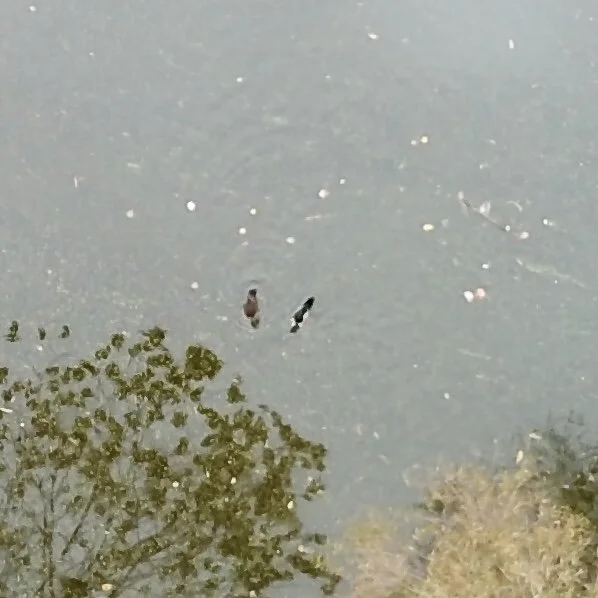
We saw these Hooded merganser (Lophodytes cucullatus) while hiking at Hueston Woods State Park. They were fun to watch. It was like a wrestling match on the water. Unfortunately, they were far away, so I didn’t get the best photo. It was still cool.

This hooded merganser do not stay here during the winter, but they don’t travel far. From Wikipedia:

Hooded mergansers are short-distance migrants, and they winter in the United States in regions where winter temperatures allow for ice-free conditions on ponds, lakes and rivers. They have two major year-round ranges. One is in the Eastern United States from the southern Canada–US border along the Atlantic Coast to the Gulf Coast in the region of the Mississippi delta. A smaller year-round range extends from Washington state and southern British Columbia to northern Idaho.

They also breed to some extent in regions from Missouri to southern Canada and from Nova Scotia to eastern North Dakota and Saskatchewan, migrating when necessary to avoid winter conditions.(More on the Hooded merganser on Wikipedia)

~ Rick


Rick’s latest technology muse:

Check out our vlog, which includes more pictures and video on YouTube at tales.photos. Remember to subscribe!

Prints are available for many of the photos on this site on canvas, metal or glass. They are stunning and you can purchase them for a wall at home. Click the link or the ‘prints and such’ tab.

©2019 Rick Cartwright

Safe To Fish?

Adjustments.jpeg

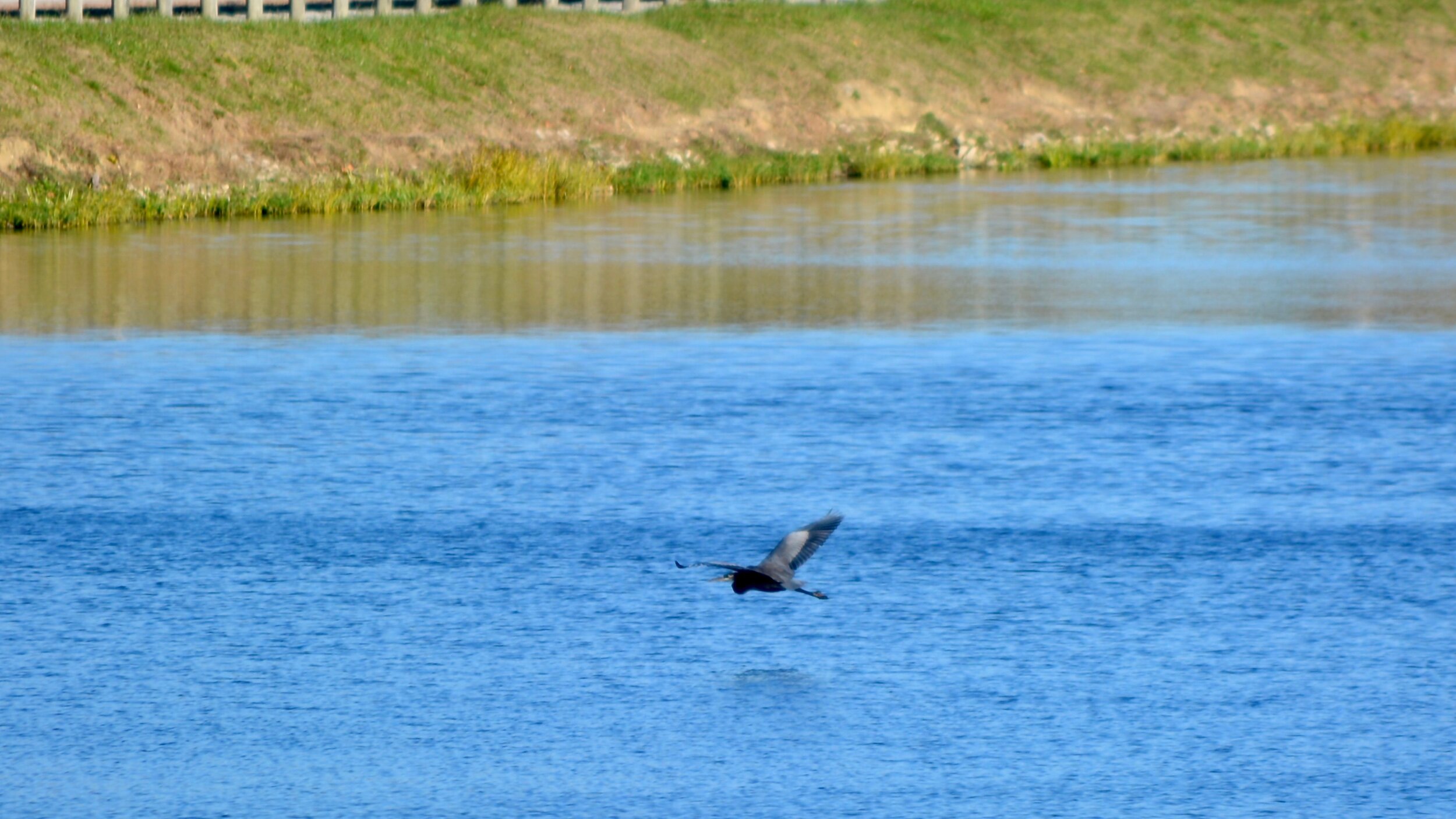
We went to Kiser Lake State Park to photograph the foliage, but could not pass on the opportunity to photograph this Great Blue Heron. The photo is a little dark, but it captures his color well.

As you can see, shortly after I shot this photo, he took off. Teresa captured his escape! Good bye, my friend. See you soon.

Adjustments.jpeg

Sadly, like at other Lakes, Kiser Lake authorities are still dealing with blue-green algae. We saw signs that requested all fish caught be returned to the lake. I don’t understand exactly how they are working on this issue, but it is sad.

Here is a clip from WHIO from a few years ago when there was an advisory in effect. (Link below). There is no advisory right now, but its still an issue.

Warning signs have been posted at Kiser Lake State Park, near St. Paris in Champaign County.

The health department advises against swimming or wading, especially for children, pregnant women, those with medical conditions and pets.

Cyanobacteria, often called blue-green algae, are commonly found in Ohio lakes, ponds and slow-moving rivers. Many species do not produce toxins, but some cause harmful algal blooms. The blooms are visible as thick mats or scum on the surface of the water, which can vary in color from bluish-green, bright green, or even red or maroon, according the the health department. (Public health advisory for Kiser Lake algae toxins (WHIO))

So sad.

~ Rick


Rick’s latest technology muse:

Check out our vlog, which includes more pictures and video on YouTube at tales.photos. Remember to subscribe!

Prints are available for many of the photos on this site on canvas, metal or glass. They are stunning and you can purchase them for a wall at home. Click the link or the ‘prints and such’ tab.

©2019 Rick Cartwright

Lost A Wood Duck

public.jpeg

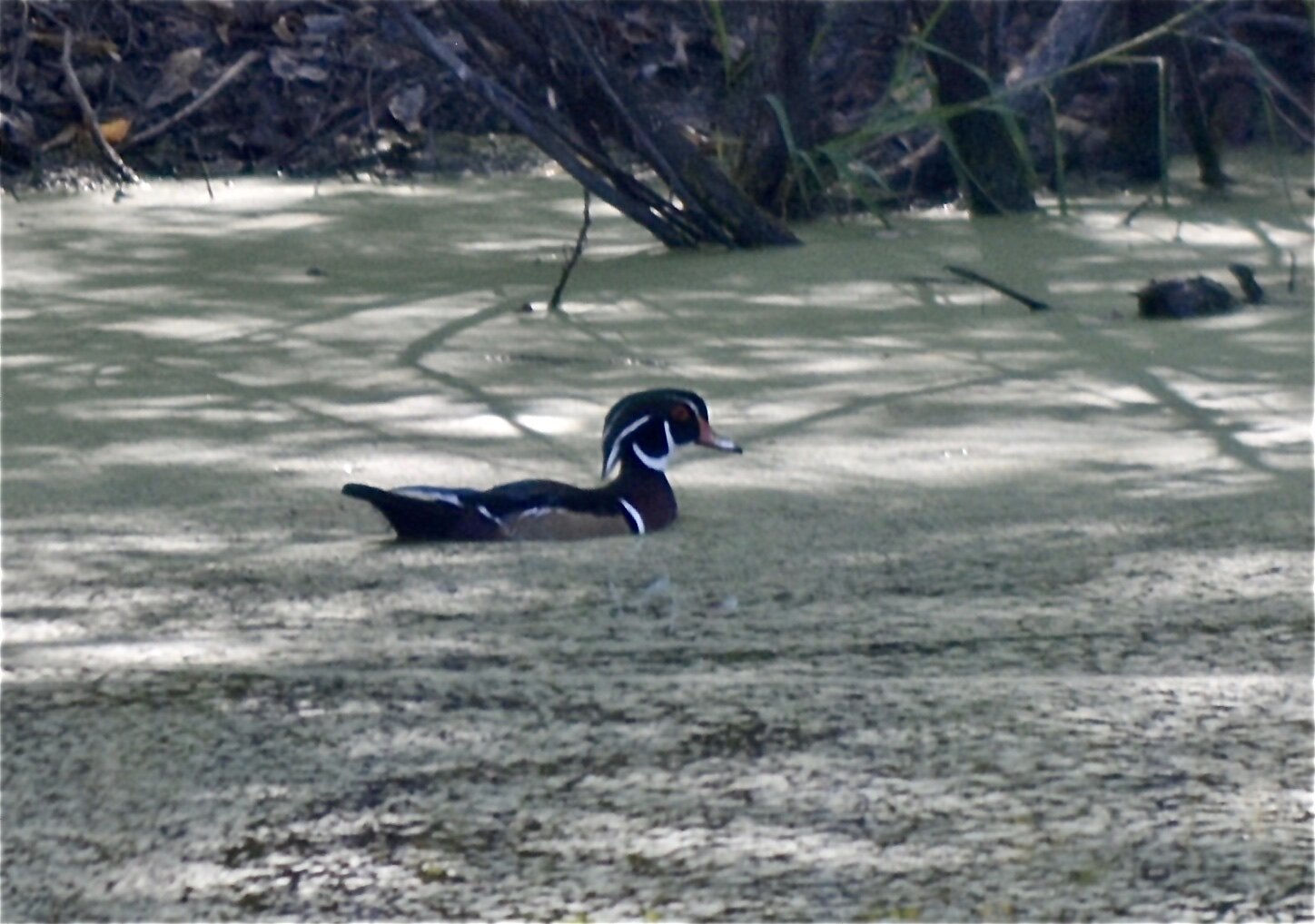
Teresa captured this photo of this Wood Duck while I was flying my drone. I took my larger lens over to try and get a photo with more resolution, but lost the duck somewhere. That happens. This is a good shot considering the distance and crop.

Wikipedia has this to say about the Wood Duck:

"Their breeding habitat is wooded swamps, shallow lakes, marshes or ponds, and creeks in eastern North America, the west coast of the United States and western Mexico. They usually nest in cavities in trees close to water, although they will take advantage of nesting boxes in wetland locations. Females line their nests with feathers and other soft materials, and the elevation provides some protection from predators.[5] Unlike most other ducks, the wood duck has sharp claws for perching in trees and can, in southern regions, produce two broods in a single season—the only North American duck that can do so."

"Females typically lay between 7 and 15 white-tan eggs that incubate for an average of 30 days.[4] However, if nesting boxes are placed too close together, females may lay eggs in the nests of their neighbours, which may lead to nests which may contain as many as 30 eggs and unsuccessful incubation, a behaviour known as "nest dumping."

"After hatching, the ducklings climb to the opening of the nest cavity, jump down from the nest tree and make their way to water. The mother calls them to her, but does not help them in any way. They prefer nesting over water so the young have a soft landing, but will nest up to 140 m (460 ft) away from the shoreline. The day after they hatch, the young climb to the nest entrance and jump to the ground. The ducklings can swim and find their own food by this time."

These birds feed by dabbling or walking on land. Dabbling means to search for food from the surface of the water, as opposed to diving underneath the surface to scavenge for food. They mainly eat berries, acorns, and seeds, but also insects, making them omnivores.

~ Rick


Rick’s latest technology muse:

Check out our vlog, which includes more pictures and video on YouTube at [tales.photos][1]. Remember to subscribe!

[Prints are available][2] for many of the photos on this site on canvas, metal or glass. They are stunning and you can purchase them for a wall at home. Click the link or the ‘prints and such’ tab.

©2019 Rick Cartwright